The Italian Master's Final Sanctuary
Tucked into a wooded valley just 400 meters from the Royal Château d'Amboise, Château du Clos Lucé is an intimate pink-brick and white-tufa manor house that holds a singular place in human intellectual history. Built in 1471 by King Louis XI's chamberlain, it was purchased by King Charles VIII in 1490 as a private summer retreat for royal family members.
Yet Clos Lucé is celebrated worldwide for a single chapter: the final three years of Leonardo da Vinci. In the autumn of 1516, the 64-year-old Tuscan polymath accepted the invitation of 22-year-old King François I to leave Italy. Crossing the Alps on the back of a mule, Leonardo brought his devoted pupil Francesco Melzi, his faithful servant Battista de Villanis, and leather saddlebags containing his most cherished possessions - hundreds of pages of engineering manuscripts and three unfinished canvas paintings: the Mona Lisa, The Virgin and Child with Saint Anne, and Saint John the Baptist.
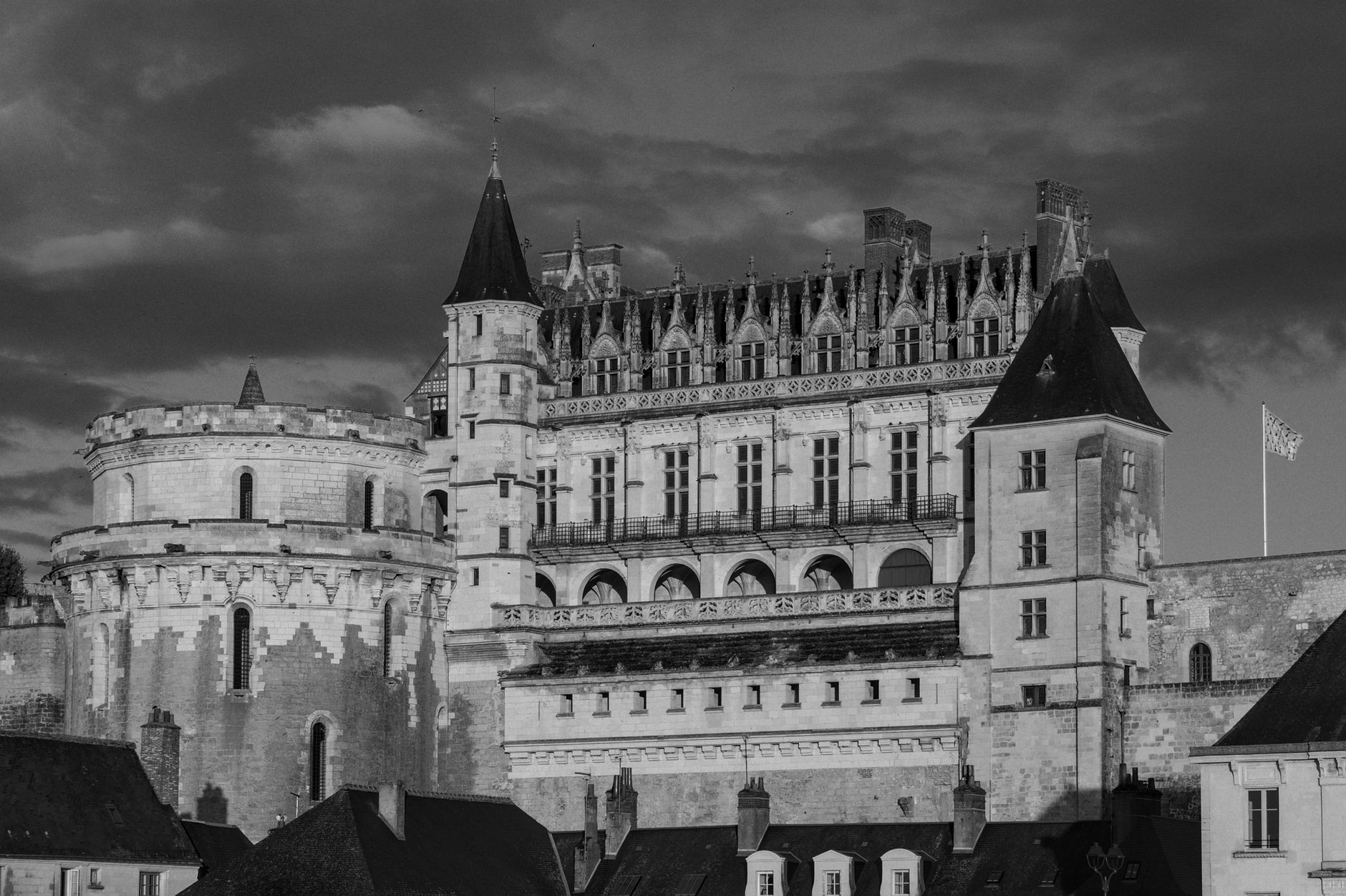
The Royal Friendship and the Secret Underground Tunnel
François I welcomed the aging genius with unprecedented reverence. The monarch named him "Premier Painter, Engineer and Architect to the King," granting him the manor of Clos Lucé and an annual royal pension of 700 gold écus. The king placed no contractual obligations on Leonardo; his only royal request was "the pleasure of hearing him talk."
According to royal chronicles, a secret underground vaulted passageway connected the basement of Clos Lucé directly to the royal apartments at Château d'Amboise. The young king could walk between the estates unseen to spend hours discussing geometry, hydraulic engineering, military defenses, and stage machinery with the Florentine master. A preserved portion of this tunnel entrance is visible today in the basement of the house.
Combine Clos Lucé & Amboise in One Afternoon
Because both monuments sit within the same town, booking a combined skip-the-line pass lets you explore the royal castle ramparts and Da Vinci's workshops without waiting at ticket booths.
Inside the Manor: Workshops, Inventions and Deathbed
Touring the interior of Clos Lucé is an extraordinarily intimate experience. On the upper floor sits Leonardo's bedchamber, with views over the royal gardens. It was in this canopied bed that Leonardo passed away on May 2, 1519. Nine days earlier, realizing his health was failing, he summoned Guillaume Boreau, the royal notary of Amboise, to draft his formal notarized will, bequeathing his scientific notebooks, instruments, and anatomical drawings to Francesco Melzi.
Across the corridor sits the bedchamber of Marguerite de Navarre, the cultured sister of François I. Downstairs, the museum has meticulously restored Leonardo's three workshops: his painting studio with easels, pigments, and natural daylight; his library containing facsimiles of the books he studied (from Archimedes to Dante); and his cabinet of curiosities packed with minerals, dried botanicals, and taxidermy specimens.
In the vaulted basement halls, visitors discover forty working mechanical models constructed by IBM engineers from Leonardo's original notebook codices. Highlights include the first armored military tank with directional cannons, the revolving siege bridge, an aerial screw (the conceptual forerunner of the modern helicopter), a paddle-wheel boat, and an automated hydraulic water pump.
The 7-Hectare Interactive Leonardo da Vinci Park
A major highlight of visiting Clos Lucé is stepping outdoors into the seven-hectare landscape park and botanical garden. The estate has transformed the grounds into an open-air laboratory exploring Leonardo's observations on nature, hydrodynamics, and aerodynamics.
Scattered through the woods and along the mill stream are twenty life-sized, interactive mechanical machines. Visitors can physically turn wheels to fire a water cannon, push a giant Archimedean screw to raise water from the pond, or walk across a two-tier wooden military bridge built without bolts or nails. Forty translucent sound canvases are suspended among the trees, playing excerpts of Leonardo's musings on bird flight, water currents, and plant morphology.
At the edge of the park sits the 500-square-meter modern gallery space dedicated to "Leonardo da Vinci, Painter and Architect." Here, high-resolution digital projection mapping brings his anatomical studies, lost battle murals, and architectural plans for a visionary ideal royal capital at Romorantin to vivid life.
Red Flags and Mistakes to Avoid at Clos Lucé
Direct Choice Visitor FAQ
Yes, Clos Lucé is widely considered the most engaging castle in the Loire Valley for children. Unlike traditional palaces where visitors are told not to touch furnishings, the outdoor park is specifically designed for hands-on interaction, allowing children to crank wooden machine gears, steer paddle boats, and walk across Da Vinci's bridge models.
No, the authentic Mona Lisa is permanently housed in the Musée du Louvre in Paris. However, Leonardo kept the canvas in his studio at Clos Lucé until his death in 1519, where King François I purchased it for the French Royal Collection for 4,000 gold crowns. Clos Lucé displays an exceptionally faithful 17th-century studio copy alongside digital analyses of its underlying layers.
It is exactly 400 meters away. You can walk between them in less than 8 minutes along Rue Victor Hugo, which is lined with historic timber-framed houses and troglodyte cave dwellings.
Why Book Your Tickets & Excursions Online in Advance?
While purchasing tickets on-site was standard in past years, the Loire Valley châteaux now enforce strict hourly visitor caps to protect historic interiors. High-demand hours (10:30–14:30) and weekends frequently sell out days ahead. Here are the key advantages of booking digital priority passes online:
Clos Lucé Priority Tickets & Da Vinci Heritage Tours
Skip the line to Leonardo da Vinci's final residence, working invention models, and interactive landscaped science park.
Château du Clos Lucé: Da Vinci Residence & Park Priority Ticket
- Instant mobile barcode scan bypassing on-site ticket counter queues
- Tour Leonardo da Vinci's bedchamber, studio, and underground escape tunnels
- Inspect 40 working scale models of his military and hydraulic inventions
- Stroll through the 7-hectare interactive Leonardo da Vinci landscape park
Leonardo da Vinci Trail: Amboise Castle & Clos Lucé Guided Tour
- Follow in Leonardo da Vinci's footsteps through both royal and private residences
- Guided visit of Château d'Amboise and Saint-Hubert chapel tomb
- Explore Clos Lucé workshops, private bedchamber, and 40 working invention models
- Comfortable air-conditioned minivan transport with expert guide
From Tours: Chenonceau, Amboise & Clos Lucé Small-Group Day Tour
- Connect the River Cher bridge palace (Chenonceau) with Leonardo da Vinci's world
- Priority skip-the-line entrance to Chenonceau, Amboise, and Clos Lucé
- Expert narrative tracking Da Vinci's move from Rome to France at age 64
- Comfortable minivan travel from Tours with small group camaraderie
From Paris: Chambord, Chenonceau & Leonardo da Vinci Castle (Clos Lucé)
- The definitive Renaissance journey connecting François I, Catherine de' Medici, and Da Vinci
- Full skip-the-line entry to Chambord, Chenonceau, and Clos Lucé
- Interactive visit to Leonardo da Vinci's science park and invention prototypes
- Return coach transit from Paris with knowledgeable bilingual guide