The Cradle of the French Renaissance
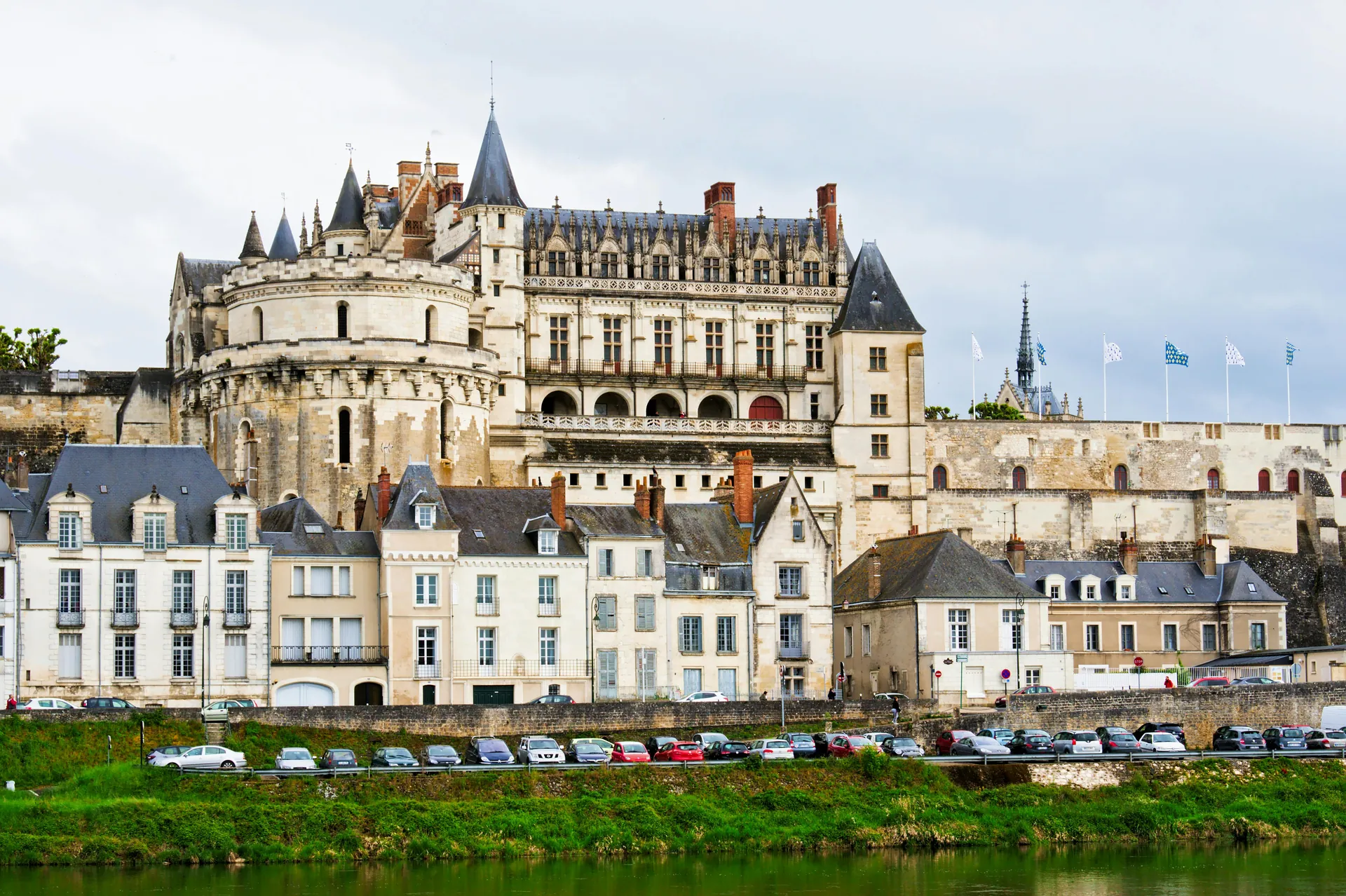
Rising on a high limestone spur directly above the River Loire, Château Royal d'Amboise occupies one of the most strategically imposing positions in central France. For over a century, from Charles VII in 1434 until Henri II in 1559, this fortress served as the nursery and favorite playground of French kings, where royal princes were raised far from the political intrigues of Paris.
Amboise was the direct gateway through which Italian Renaissance culture entered France. Following his military expedition to Naples in 1495, King Charles VIII returned dazzled by Italian art, stone palaces, and geometric horticulture. He brought back twenty-two Italian painters, sculptors, and cabinetmakers, alongside the Neapolitan agronomist Dom Pacello da Mercogliano, who laid out the very first Renaissance gardens on French soil on Amboise's upper terrace.
The Bizarre Tragedy of King Charles VIII
Charles VIII poured the royal treasury into transforming his medieval birthplace into a Renaissance showpiece. He constructed the massive Charles VIII wing with its open river loggias and high dormers. Yet the castle became the site of his untimely and bizarre death.
On April 7, 1498, on his way to watch a match of jeu de paume (an early indoor predecessor to modern tennis) in the castle moat, the 27-year-old monarch struck his forehead violently against the stone lintel of a low doorway leading to the Hauranne gallery. Although he appeared fine initially and watched the match, he collapsed into a coma later that afternoon on a straw mattress in a dirty corridor and died nine hours later. Because he left no surviving heirs, the French crown passed to his cousin, Louis XII, abruptly ending the senior Valois line.
Walk from Amboise to Leonardo da Vinci's Manor
Amboise is unique because you can visit both the royal palace and Da Vinci's final home on foot. A scenic 400-meter stroll through historic Rue Victor Hugo brings you from the castle gates directly to the entrance of Château du Clos Lucé.
Equestrian Ramps: Tour des Minimes and Tour Heurtault
One of the most extraordinary engineering achievements at Amboise is the pair of colossal circular towers: the *Tour des Minimes* (facing the Loire) and the *Tour Heurtault* (facing the south park). Standing over twenty meters in diameter with stone walls several meters thick, these towers do not contain stairs.
Instead, their interiors are carved with gentle, continuous helical stone ramps. Charles VIII designed them so that horse-drawn carriages, mounted knights, and supply wagons could ride smoothly from the town street level straight up into the elevated palace courtyard without passengers ever dismounting. Ascending these ramps on foot today reveals the astonishing masonry precision of the 15th-century French master stonemasons.
The Saint-Hubert Chapel and Leonardo da Vinci's Tomb
Perched dramatically on the outer edge of the fortress ramparts stands the Saint-Hubert Chapel, built between 1491 and 1496. Crafted from fine white tuffeau limestone in the intricate Flamboyant Gothic style, its facade features delicate stone lace carvings illustrating the vision of Saint Hubert (the patron saint of hunters encountering a stag with a glowing crucifix between its antlers).
Inside the quiet chapel lies the final resting place of Leonardo da Vinci. Da Vinci died in Amboise on May 2, 1519, at the age of sixty-seven. According to his final will, he requested burial within the collegiate church of Saint-Florentin inside the castle grounds. When that church was demolished during the Napoleonic era, 19th-century excavations uncovered a skeleton bearing an Italian silver medal of François I. The remains were reverently reinterred in 1874 under a simple black marble ledger stone in the Saint-Hubert Chapel, where admirers from across the globe still place fresh flowers.
The Bloody Conspiracy of Amboise (1560)
Amboise witnessed one of the darkest preludes to the French Wars of Religion. In March 1560, a group of provincial Protestant Huguenot nobles plotted to seize the 15-year-old King François II to free him from the domineering Catholic Guise family. The plot was betrayed to the Duke of Guise, who ambushed the conspirators in the surrounding forests.
The retribution was merciless. Over twelve hundred plotters were executed over several days. Noblemen were decapitated in the courtyard before the royal court (including the young Queen Mary Stuart), while hundreds of others were hung from the iron balcony railings of the Logis du Roi and drowned in iron cages in the Loire river. The stench of decomposing corpses became so intolerable that the royal family fled the castle, and French monarchs rarely chose to live at Amboise ever again.
Red Flags and Mistakes to Avoid at Amboise
Direct Choice Visitor FAQ
Yes, Amboise SNCF train station is located 1.2 kilometers from the castle gates. The walk takes about 15 minutes across the historic Île d'Or river bridge. If carrying heavy suitcases, hop on the local city shuttle bus (*Le Bus Amboise*) or reserve a local taxi in advance, as taxis are rarely waiting at the station platform outside peak commuter hours.
No, his tomb is located in the standalone Saint-Hubert Chapel on the upper fortress terrace, about 50 meters from the entrance of the royal residential lodge. Access to the chapel is included with your standard castle ticket.
Allow 1.5 to 2 hours for the royal apartments, Saint-Hubert Chapel, and the panoramic terraced gardens. If combining your visit with Clos Lucé on the same afternoon, dedicate 4 to 5 hours in total for both sites plus a leisurely lunch in town.
Why Book Your Tickets & Excursions Online in Advance?
While purchasing tickets on-site was standard in past years, the Loire Valley châteaux now enforce strict hourly visitor caps to protect historic interiors. High-demand hours (10:30–14:30) and weekends frequently sell out days ahead. Here are the key advantages of booking digital priority passes online:
Château Royal d'Amboise Tickets & Local Tours (Viator, Tiqets & GYG)
Digital priority entry via Tiqets, historic cliffside cave tastings at Caves Ambacia, and guided Renaissance walks.
Château Royal d'Amboise: Skip-the-Line Priority Digital Ticket
- Direct smartphone entry avoiding on-site ticket queues
- Pay homage at Leonardo da Vinci's tomb inside Saint-Hubert Chapel
- Walk the imposing Cavalier minimes ramp and massive equestrian towers
- Spectacular panoramic views across the Loire Valley from garden terraces
Caves Ambacia: Troglodyte Cellars Tour & Wine Tasting in Amboise
- Explore 15th-century underground tuffeau chalk cellars carved into cliffs
- Extensive private collection of historic Loire vintages dating back to 1874
- Guided sensory tasting of 5 local AOC wines with artisan Touraine cheeses
- Walking distance from Amboise town centre and Clos Lucé
Afternoon Loire Wine Tour in Touraine from Tours or Amboise
- Visits to 2 authentic family-owned wineries in Vouvray & Touraine
- Walk through underground chalk tunnels and steep hillside vineyards
- Paired tasting with Sainte-Maure de Touraine goat cheese & rillons
- Pickup available from both Tours tourist office and Amboise centre
Château Royal d'Amboise: Guided Visit with Royal Historian
- Engaging storyteller guide covering Charles VIII and François I court life
- Detailed architectural walkthrough of Gothic and Renaissance wings
- In-depth perspective on Leonardo da Vinci's final 3 years in France
- Access to the royal grounds and panoramic gardens
From Paris: Chambord, Chenonceau & Royal Château d'Amboise Day Trip
- Round-trip air-conditioned executive coach from central Paris
- Skip-the-line admissions to all three crown jewel châteaux
- See Chambord's grand double-helix staircase and Chenonceau river gallery
- Wander the historic royal terraces of Amboise and Da Vinci's resting place